Bill was born on July 10, 1927 and died on June 30, 2011.
Best pilots get toughest missions
By Air Chief Marshal Jamal A Khan (R)
This quote from John Quirk’s much-read 1962 book about fighter pilots resurfaced in my mind because it fits perfectly the PAF career of one of its most admired combat commanders, Air Commodore Nazir “Bill†Latif, a Christian officer born in Lahore, who passed into the country’s air history on the last day of June. Any PAF pilot who has commanded a combat squadron (16-24 planes and pilots), a wing (50-70) and an air base (70-120) is considered to have proven to the full his professional credentials through the three toughest career rungs, and is justifiably respected for these marks of distinction among his contemporaries.
Bill Latif commanded two squadrons, three wings (two of them twice!) and two air bases (Peshawar and Karachi’s Masroor), an unmatched command performance that brought hundreds of PAF pilots in close contact with this charismatic leader in the air and on ground. He also held the important post of Director of Operations during one of his staff assignments. Remarkably, Bill Latif was never seen even hinting at how good a pilot he was. He commanded respect by automatically undertaking very difficult flying tasks and achieving goals with apparent ease. I with others noted that he always underplayed his exploits and close calls, of which he had many. In the fighter pilots’ inner circles these hair-raising flights were often recounted to re-affirm their infectious belief that even death could be cheated if one kept one’s skills honed and anticipated threats before they materialised.
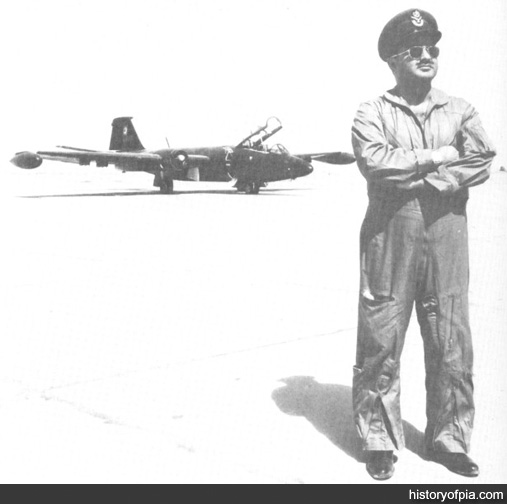
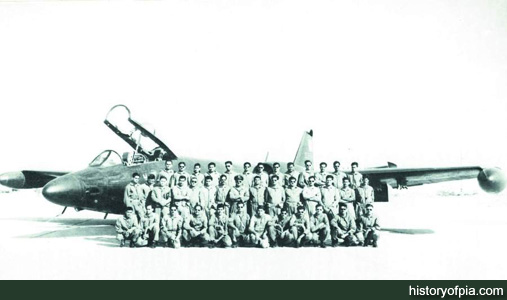
Nazir 'Bill' Latif with a PAF Martin B-57 Canberra bomber. After the outbreak of hostilities with India in 1965, half of PAF'S B-57 force was detached from Mauripur to Peshawar under the Command of Wing Commander Nazir Latif - Photo & Info Source: book titled "Battle for Pakistan - The Air War of 1965" authored by John Fricker
In the 1965 war, he led the country’s only bomber wing that could penetrate deep into enemy territory and his pilots relentlessly kept the IAF air bases under attack, making a huge contribution to that war’s objectives. In the 1971 war, he commanded the same base from which his wing had flown seven years before, only this time under much more difficult circumstances and competing demands on his planes. Without asking for reinforcements that he knew he would not get (because of concentration for an imminent campaign in the north), Latif and his able fighter wing commander successfully launched a series of air strikes to force the retreat of a very dangerous Indian thrust against Hyderabad. Once again, the fighter and bomber pilots under his command courageously achieved and even exceeded their assigned goals. Latif proudly wore his distinguished service S.Bt. and his S.J., a wartime award for valour.
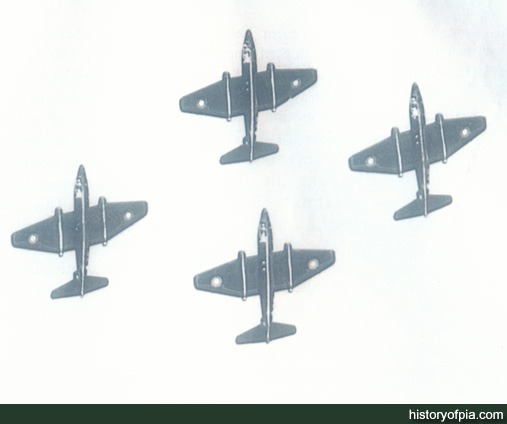
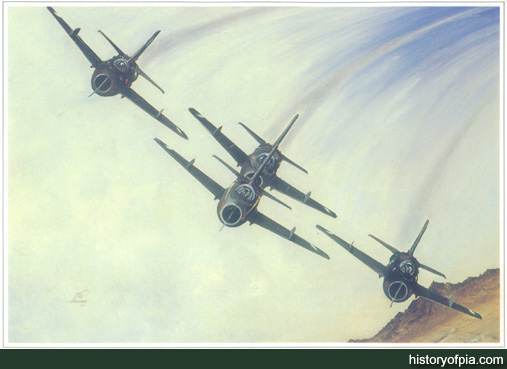
Bill formed and led the world’s only formation aerobatic team on a bomber aircraft, stunning international enthusiasts with his own and his pilots’ skills when he led four B-57 bombers into loops and rolls at a public display in 1964. Bomber planes are seldom built to withstand aerobatic stresses and being much heavier than fighters, they are harder to control precisely through intricate manoeuvres. Latif followed this ‘first’ with another. In 1969, he formed and led the PAF’s first aerobatic team on a supersonic aircraft, the Chinese F-6. Though kind and generous to a fault, Latif as a commander never hesitated calling some of his close friends who served under him to tell them the reasons he had given them adverse reports and what they needed to do to change that assessment. But both outside and during working hours, he remained ever affable, empathetic, humorous and ever full of amusing anecdotes (many in chaste vernacular) that made the air force a very happy community during his time. In recognition of his outstanding services to the nation’s air arm, the PAF attentively tended to Latif’s medical and related needs on a special directive by the Air Chief, who was also present at his funeral. During the last five years of his life, Bill’s condition needed such caring attention the most. A large number of senior air force officers attended the funeral service of the highly admired Latif, before he was given a hero’s burial in Islamabad.
Source: Pakistan Observer