|
Extraordinary,
beautiful, rare and exciting action photographs of PIA airliners
|
 |
|
|
|
ATR 42-500
(Copyright © Aroosh Naqvi) |
|
|
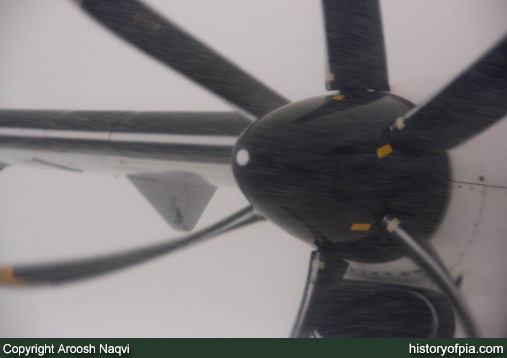
ATR, like most
turboprop aircraft, flies at lower levels where moisture and
temperatures are ideal, icing is one of the aircraft's biggest
drawbacks. As illustrated here, the aircraft is passing through
a lot of
moisture which upon contact with the aircraft skin freezes when
the temperatures are near the freezing point |
|
 |
|
|
|
ATR 42-500
(Copyright © Aroosh Naqvi) |
|
|
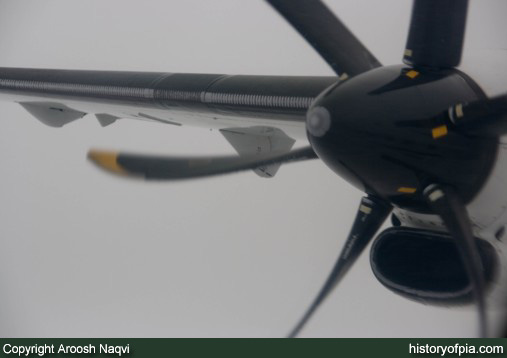
Hi shutter
speed to freeze the prop shows ice begin to accumulate on the
leading edge of the prop blades as well |
|
 |
|
|
|
ATR 42-500
(Copyright © Aroosh Naqvi) |
|
|
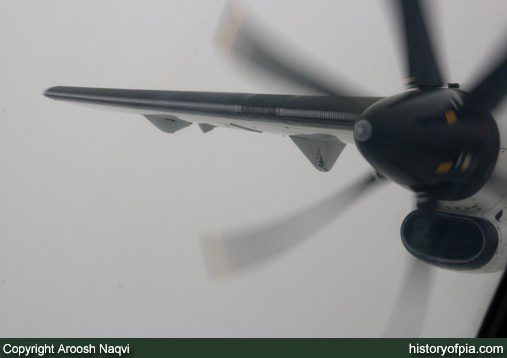
The initial ice
buildup on the wing leading edge, spinner and engine intake |
|
 |
|
|
|
ATR 42-500
(Copyright © Aroosh Naqvi) |
|
|
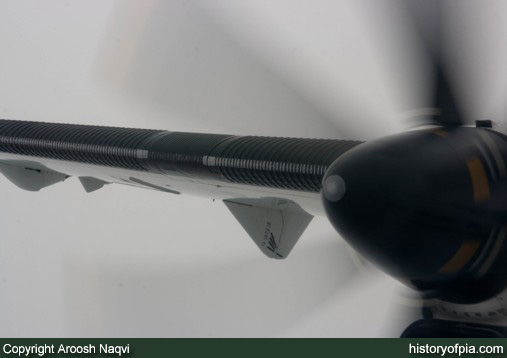
The ATR is
equipped with two defenses against ice. Anti-Ice, which as the
name suggest is there to prevent the development of ice
primarily by heating areas particularly susceptible to ice
accretion. This is the first defense, the second being De-Icing,
which as the name suggests involves the removal of ice one it
has accumulated on the aircraft. De-icing is usually done
through the use of inflatable rubber boots which expand thereby
breaking the ice. This can clearly be seen in this image
as alternative areas of the boots on the wing leading edge
expand causing the ice to crack and fall off |
|
|
|
